
 strangesounds.substack.com
 By Strange Sounds
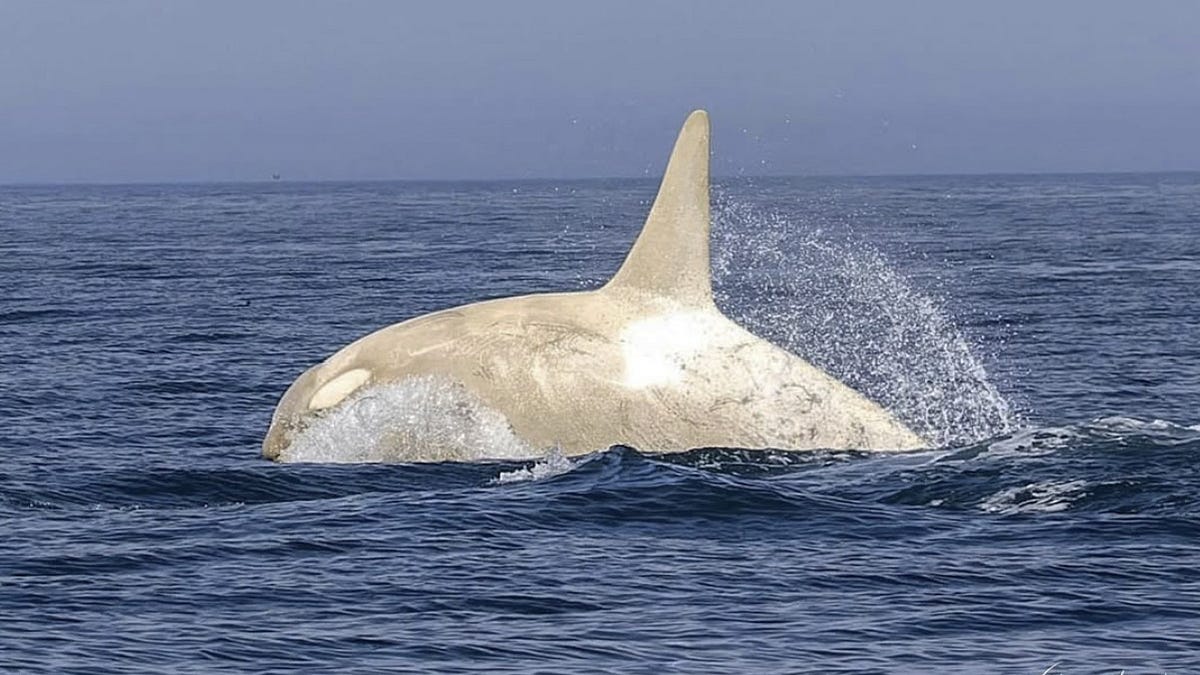
Really looks like a terrible photoshop job….
Can you imagine this wildlife photographer when he saw an amazing white orca swimming with his pod.
“This is the first time I’ve encountered a white orca after 15 years of photographing orcas in Rausu (Hokkaido, Japan),” Hayakawa shared.
You can watch the whale swim with his friends here:

Hayakawa was stunned to see an all-white male orca appear among a pod of typically pigmented whales.
As they reviewed the pictures of the whale, they confirmed it wasn’t a dream at all. There really was a cream-colored orca in the water with the others, seemingly enjoying life as if nothing were different at all.

Hayakawa returned to the same spot soon after, hoping to photograph the white orca again. To their surprise, yet another white orca appeared — this time, a female.
They steadied their camera and quickly pressed the shutter-release button. As they captured a series of pictures of the orca, they noticed an interesting detail about the whale’s face.
“The eyes appear black,” Hayakawa wrote on Instagram:

Hayakawa wasn’t immediately sure what condition the pale whales had to cause their unusual skin tone, but the color of their eyes suggested they may have luecism instead of being fully albino.
According to Treehugger, “While albinism refers to the complete lack of melanin — the natural pigment that gives skin, feathers, hair, and eyes their color — leucism involves a partial loss of pigmentation. Animals with albinism are white or pale in color over their entire bodies but also have eyes that are pale, pink, or red in color, while animals with leucism often have partially white or patchy features with darker eyes.”

The white whales might seem completely void of melanin, but their eyes and faint body markings tell a different story. These whales likely inherited leucism from their parents, creating their striking cream-colored bodies.
Though they are different conditions, albinism and leucism in wild animals can sometimes be dangerous — causing the animal to stand out to predators more easily. Luckily, these white orcas seemed to be accepted and protected by their typically colored whale counterparts…
READ FULL ARTICLE HERE… (strangesounds.substack.com)

Home | Caravan to Midnight (zutalk.com)