

 Beef News
 Beef News
They buried corporate immunity in the budget—and passed it without a single name on the record. Section 453 shields Bayer from lawsuits. Section 507 rebrands PFAS-laced sludge as “fertilizer.” The House Appropriations Committee approved both by voice vote. The public never saw it coming.
The fix is in. And they’re hoping you don’t notice.
On July 23, 2025, the House Appropriations Committee quietly advanced two of the most industry-serving provisions in recent memory: Section 453, which would grant lawsuit immunity to pesticide manufacturers, and Section 507, which would allow the continued dumping of PFAS-contaminated sewage sludge on farmland—reclassifying it as “fertilizer.”
There were no roll calls. No debate on the record. Just a voice vote—a procedural trick to keep constituents in the dark.
“Nobody knows how their representatives voted,” Breeauna Sagdal posted after the markup. They passed both 453 and 507 when no one was looking.
The Poison Papers
Section 453 blocks federal funds from being used to update pesticide labels unless those changes align with the EPA’s current risk assessments. On the surface, it sounds like bureaucratic housekeeping. In reality, it’s a legal firewall: if the EPA hasn’t updated the label, you can’t sue the manufacturer—even if the product causes cancer, birth defects, or neurological harm.

Groups like Beyond Pesticides warn this would gut the ability of farmers and consumers to seek justice. Victims of Roundup, Paraquat, or Dicamba? Sorry. Corporate immunity is now budget language.
Meanwhile, Section 507 locks in a decades-old loophole that allows biosolids—i.e., sewage sludge laced with PFAS and heavy metals—to be spread on farmland under the EPA’s “fertilizer” classification. Even as evidence mounts that these so-called biosolids are contaminating groundwater and entering food systems, Congress is moving to ensure they keep flowing. The EPA itself admits biosolids may contain “pathogens, organic chemicals, and heavy metals,” but the agency has failed to update safety thresholds or enforce transparency.
Despite growing evidence of PFAS contamination, the EPA has failed to regulate sewage sludge—prompting PEER to sue for violating the Clean Water Act.
The Industry Behind the Curtain
These provisions didn’t come out of nowhere. They were inserted quietly, after months of pressure from chemical industry lobbyists, most notably Bayer, Corteva, and the biosolids disposal lobby.
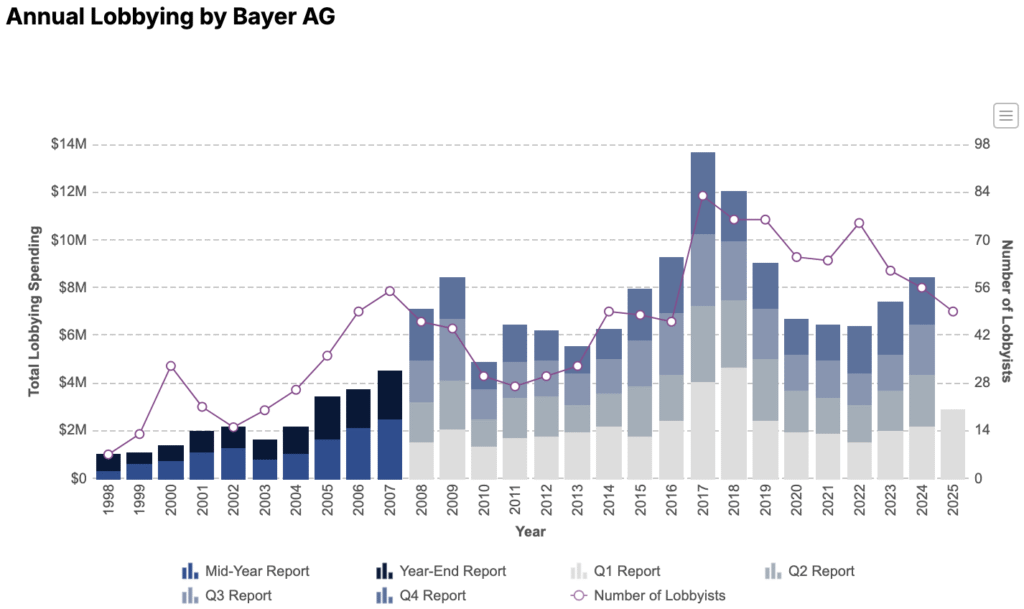
In the 2024 election cycle, Bayer spent over $8.4 million lobbying Congress, while its PAC continued contributions to members of both parties. Bayer’s top legal priority? Limiting its exposure to glyphosate and Dicamba lawsuits. And now, thanks to Section 453, they’re getting that wish.
The voice vote that advanced these measures was not a mistake. It was a tactic. They know these riders wouldn’t survive a floor debate. The goal is to bury them in a 200-page budget and call it a day.
READ FULL ARTICLE HERE… – Beef News

Home | Caravan to Midnight (zutalk.com)




We Need Your Help To Keep Caravan To Midnight Going,
Please Consider Donating To Help Keep Independent Media Independent