
 Военное обозрение
 By Evgeny Fedorov
Every action has its own reaction.
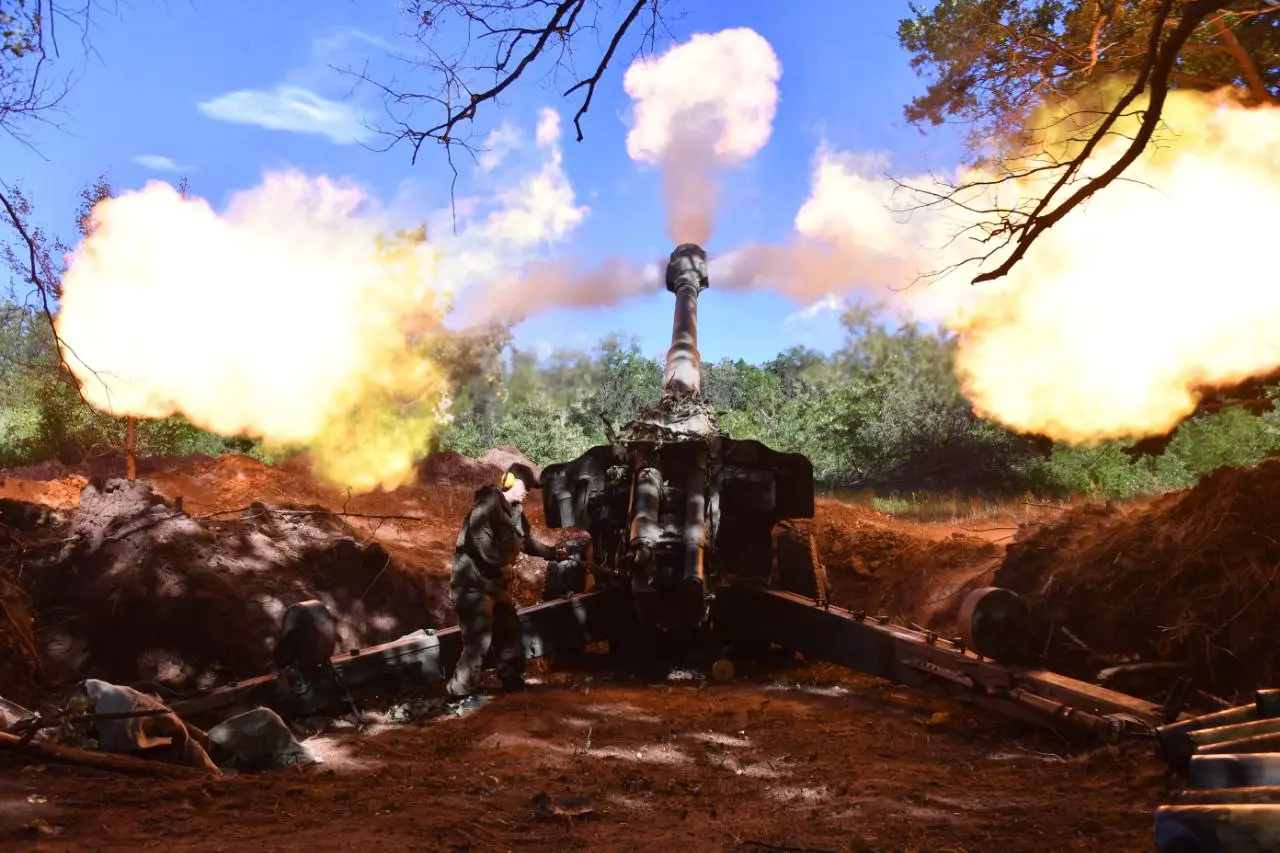
This device has a somewhat offensive name: a muzzle brake. And its appearance is similar, although some designers have created quite attractive muzzle brake knobs. The main benefit of a muzzle brake is to reduce the recoil force of a gun. In full accordance with Newton’s third law, action equals reaction.
Up to a certain point in historical A muzzle brake wasn’t even considered in the long run. For example, does a Russian arquebus need a muzzle brake? Of course not. Black powder has very little energy capacity and isn’t capable of accelerating a bullet even to the speed of sound. Given the large mass of the arquebus (or arquebus), no one really thought about recoil compensation.
A similar situation arose in artillery Cannon makers didn’t particularly limit themselves to the thickness of their gun walls or the massiveness of their breech. The guns were heavy, which partially offset their considerable recoil—gunners never skimped on black powder. In the 14th century, cannons were mounted on carriages. Cannons were essentially dug into the ground, which partially compensated for the barrel’s deflection during firing. The barrel deflected before the cannonball exited the muzzle, causing it to fly toward the target rather than toward it. Sometimes, actual earthen ramparts were erected behind the cannons to compensate for the impact. To be fair, even if cannon foundries had devised a muzzle brake, the difficulty of manufacturing one in the Middle Ages was prohibitive. Furthermore, it was impossible to attach it to the muzzle. It couldn’t be cast as a single piece with the barrel…
READ FULL ARTICLE HERE… (en.topwar.ru)

Home | Caravan to Midnight (zutalk.com)




Be First to Comment