
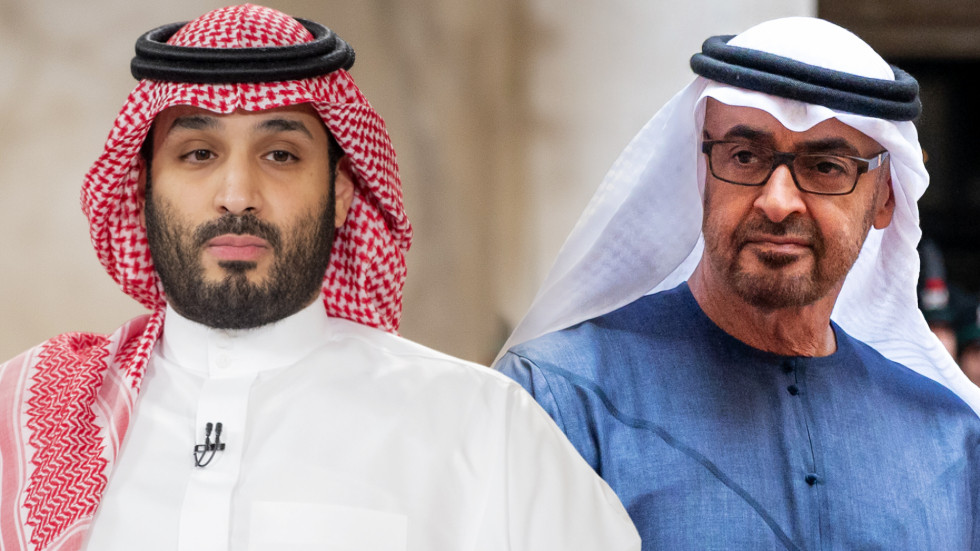
 RT International
 The region is entering a season in which old assurances are fading and new habits of power are being learned in real time
By Murad Sadygzade, President of the Middle East Studies Center, Visiting Lecturer, HSE University (Moscow).
Across the globe, the post-Cold War settlement that once carried the promise of Western primacy is no longer taken as an unshakeable fact. Its vocabulary remains in circulation, yet real-time history continues to contest its authority. In the space left behind, many states are seeking a different idea of order, one that sounds less like instruction from a single center and more like negotiated balance among several centers. In such a moment, regions that were once treated as arenas begin to behave like authors. The Greater Middle East is one of the first places where this change is becoming visible as a messy strategic recomposition in which security is no longer outsourced and alliances are no longer assumed to be permanent.
For decades, a simple model dominated strategic thinking in the region. Washington would remain the ultimate guarantor, and regional states would calibrate their risks inside the umbrella of American deterrence. That model did not always prevent wars, but it provided a framework for expectation. Even when trust frayed, the underlying assumption was that the US could be induced to act, and that the cost of ignoring its interests would be prohibitive. In recent years, however, the region has experienced a succession of shocks that have made the old calculus feel less reliable. One of the most dramatic was the Israeli strike in Doha in September 2025, an operation that pushed a long-simmering anxiety into the open by showing how quickly escalation could breach political red lines in the Gulf. If such an event could occur with only limited external restraint, then the notion of an automatic security backstop began to look like a story the region told itself rather than a guarantee the system could still deliver.
…
Read Full Article Here…(rt.com)
Home | Caravan to Midnight (zutalk.com)
Live Stream + Chat (zutalk.com)




Be First to Comment