
 freebeacon.com
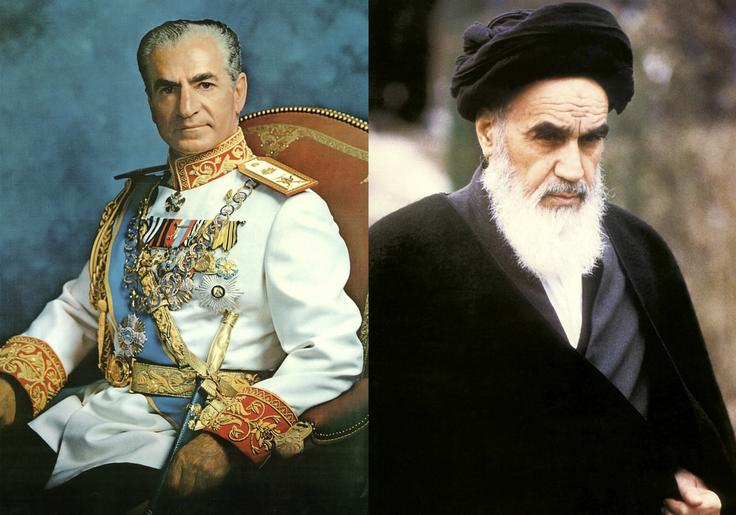
 REVIEW: ‘King of Kings: The Iranian Revolution: A Story of Hubris, Delusion and Catastrophic Miscalculation’ by Scott Anderson
Since 1979 numerous scholars and journalists have tried to explain why the Iranian people revolted against their monarch. Most books touch on the same themes: A diffident monarch pretending to be a strongman faced an unexpected revolt and wilted. America was too distracted by other crises and too confident in Shah Mohammad Reza Pahlavi to focus on the monarchy’s collapsing ramparts. And yet, the blame game goes on. Who lost Iran has been one of Washington’s favorite blood sports. Jimmy Carter blamed the CIA; the Republicans blamed Carter, and the Iranian exiles blamed everyone but themselves.
Scott Anderson’s King of Kings is an engaging and most welcome account of this sordid affair. With his keen eye for detail and an ability to develop characters, Anderson takes us back to the streets and alleyways of Iran of the 1970s. His method is to tell the story through the prism of four primary characters. Ebrahim Yazdi, a naturalized American citizen who decided to leave his medical research in Texas for the more enthralling task of revolution. Two midlevel officials in Washington: State Department’s Iran desk officer Henry Precht and National Security Council aide Gary Sick. In Iran, he pays much attention to the colorful Foreign Service officer in the provincial city of Tabriz, Michael Metrinko. Other characters fade in and out, but the core four remain a constant.
A revolution is an impossible phenomenon to predict ahead of time. Even as it unfolds, one cannot understand its full dimensions and its destructive potential. The signs of discontent in Iran were all too obvious: class cleavages, massive corruption, and out-of-touch elite. The economy was sputtering at a time when the shah needed resources to sanction his rule. But these things were evident in other societies that did not have a populist revolution. It would require a particular degree of prescience to predict in 1978 that a monarch who had ruled for over three decades would simply whimper and fold.
Anderson can be a bit harsh in his censure of America’s political class for failing to see the coming revolt. The fact is that the CIA routinely chronicled the many problems in Iran. And it is hard to read astute journalistic accounts such as Frances FitzGerald’s “Giving the Shah everything he wants,” in the 1974 edition of Harper’s, without appreciating that not all that glittered in Iran was gold. In both the government and academy, most observers of Iran concluded that the monarch who had survived so many crises could manage the convulsions provoked by a relentless modernization drive. This was not an outrageous conclusion.
…
Read Full Article Here…(freebeacon.com)
Home | Caravan to Midnight (zutalk.com)
Live Stream + Chat (zutalk.com)